Four stories from the weekend that every AI builder should have on radar heading into the week. The chip supply chain just told you exactly how much demand is real, China’s leader is about to claim the governance spotlight, OpenAI floated a radical equity play, and a Chinese image model just shipped a feature that makes it a design tool, not just a generator.
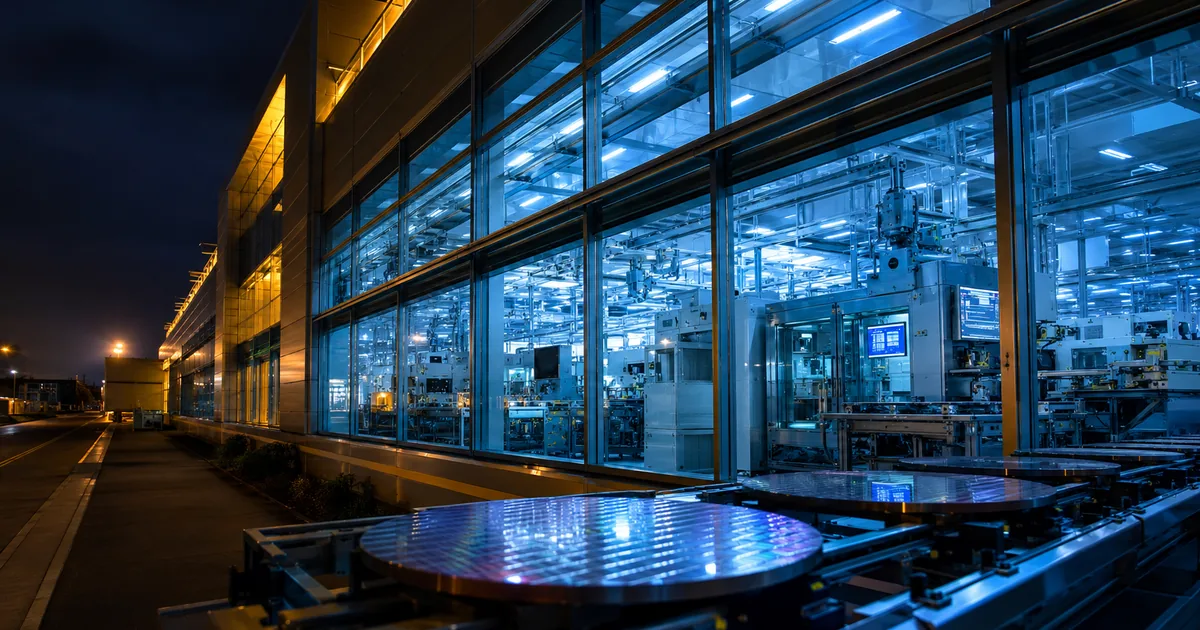
TSMC Posts Record Revenue as AI Chip Demand Rewrites the Calendar
Taiwan Semiconductor Manufacturing reported second-quarter revenue of NT$1.27 trillion, roughly $39.62 billion, up 36% year over year and above analyst expectations. June alone was the largest single month in the company’s nearly four-decade history: NT$442.68 billion (approximately $13.8 billion), a 68% jump from June 2025.
First-half 2026 revenue hit $75 billion. TSMC’s 3-nanometer manufacturing and its CoWoS advanced chip-packaging lines are both sold out through year-end.
These are not projections or guidance or forward-looking statements. This is cash collected. Every AI chip that Nvidia, AMD, Apple, Qualcomm, Anthropic (via Amazon), and now Meta (Iris) designs still runs through one company’s fabs, and that company cannot build capacity fast enough to meet what the market wants.
Builder verdict: matters. If you run production AI workloads, the supply story shapes your costs. Sold-out fabs through December mean inference pricing is not coming down as fast as the model announcements suggest. The gap between “we released a cheaper model” and “you can actually get enough compute to run it at scale” is real, and TSMC’s numbers are the clearest proof.
Xi Jinping Will Keynote the Shanghai World AI Conference on July 17
Xinhua confirmed on July 13 that President Xi Jinping will deliver the keynote at the 2026 World Artificial Intelligence Conference in Shanghai on July 17. It is the first time he has attended the event since it launched in 2018.
The timing is deliberate. July 17 is the same day Gemini 3.5 Pro is expected to launch. The West’s most anticipated model of the summer drops the same morning China’s most powerful leader steps onto the world’s biggest AI governance stage.
Beijing has been accelerating plans for a World AI Cooperation Organization, a proposed international body it wants headquartered in Shanghai. Xi showing up in person is the clearest signal yet that China intends to set the governance rules, not just follow them. This comes weeks after the UN’s Independent Scientific Panel on AI warned that science cannot currently guarantee advanced AI will not cause catastrophic harm, and neither Geneva nor Washington has moved to fill the governance vacuum.
Builder verdict: matters. Governance shapes where you can deploy and what data you can use. If China stands up a competing international AI governance body, builders operating across borders will face two regulatory regimes, not one. That is a compliance cost and an architecture decision.
OpenAI Proposes a 5% Government Stake Modeled on Alaska’s Oil Fund
The Financial Times reported that Sam Altman pitched the Trump administration on giving the U.S. government a 5% equity stake in OpenAI, worth roughly $42.6 billion at the company’s $852 billion March valuation. The broader proposal: every leading U.S. AI company would allocate 5% of its equity to a public vehicle modeled on the Alaska Permanent Fund, the sovereign wealth fund that invests Alaska’s oil revenues and pays residents an annual dividend.
Altman reportedly raised the idea with President Trump, Commerce Secretary Howard Lutnick, and Treasury Secretary Scott Bessent. He has also spoken with Senator Bernie Sanders in recent weeks. The FT characterized the discussions as conceptual, early-stage, and potentially requiring an act of Congress.
The framing is clever: position AI companies as the new oil, the equity as a public resource, and the dividend as a way to share the gains. It also lands the same week OpenAI is preparing a confidential IPO filing targeting September, which makes the timing look less like altruism and more like regulatory positioning.
Builder verdict: marketing, until Congress acts. No legislation has been introduced. No other company has agreed. The concept is interesting, the politics are real, but nothing here changes what you build or how you build it today. File it under “watch” and move on.
ByteDance Ships Seedream 5.0 Pro With Editable Layer Output
ByteDance’s Seed team launched Seedream 5.0 Pro on July 8, and the headline feature is not better image quality. It is layer separation. The model can output design assets as editable layers rather than a flat image.
That is the difference between handing a designer a finished poster and handing them a working Photoshop file. For anyone running a content operation, this shifts image generation from “make a picture” to “make a design asset I can actually edit.”
Beyond layers, the model supports precision editing via click, lasso, recolor, and material swapping, native support for over 10 languages including right-to-left layouts, and what ByteDance calls complex information visualization for infographics and data-heavy content. It is available on Volcano Engine, BytePlus, and third-party hosts including fal and ComfyUI.
This is the second major creative AI release from China in a month (following Seedance 2.5’s 30-second native video generation). The assumption that the best creative AI tools ship from San Francisco is no longer safe.
Builder verdict: breaks your stack. If you use image generation in a production workflow, especially for marketing, editorial, or e-commerce, layer output is a genuine capability jump. It means you can generate a hero image and then adjust the background, swap a color, or reposition an element without regenerating from scratch. I have not tested it against gpt-image-2 in my own pipeline yet, but the feature set is compelling enough to put on the evaluation list this week.