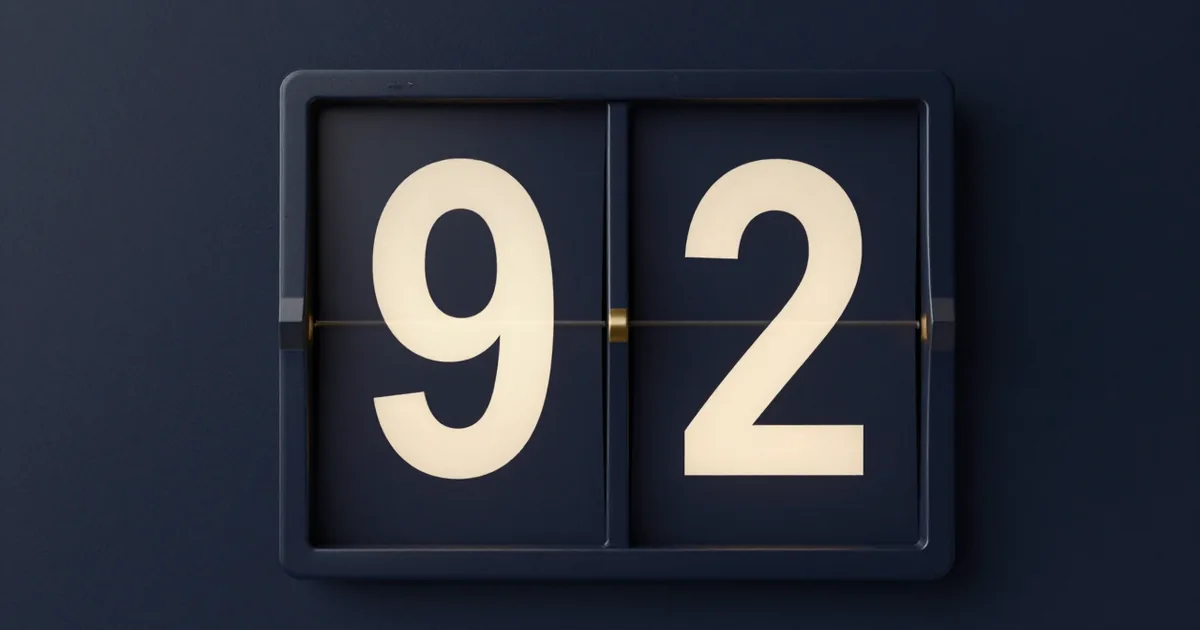
Somewhere this morning a support bot running on GPT-4o mini answered its first ticket of the day, and as of a notice OpenAI sent today it has 92 days left to live.
- OpenAI told developers today that GPT-4o, GPT-4o mini, GPT-4.1 and GPT-4.1 mini leave its API on January 14, 2027, fine-tuned versions included.
- Google made Gemini 4 Argon generally available yesterday at $2 per million input tokens and $10 per million output, a price that doubles on December 1.
- An OpenAI engineer has been charged with bugging an executive conference room, and the evidence described so far is mostly query history.
- OpenAI published a customer story saying Higgsfield’s AI videos now run past 10 minutes.
Argon will get the headlines today, along with its benchmark table. I would spend the first coffee on the first bullet. OpenAI’s own deprecations page promises at least six months’ notice before it retires a generally available model. October 14 to January 14 is 92 days. I counted twice. It is still 92.
OpenAI Promised Six Months of Notice. GPT-4o Got 92 Days.
Breaks your stack, because a working integration stops answering on a fixed date. The deprecation notice lists five snapshots: gpt-4o-2024-08-06, gpt-4o-2024-11-20, gpt-4o-mini-2024-07-18, gpt-4.1-2025-04-14 and gpt-4.1-mini-2025-04-14. All five shut down January 14. All five get the same recommended replacement, gpt-6-luna. Then one line does the real damage: “Fine-tuned versions of these models follow the same shutdown schedule as their underlying base models.”
Scroll up the same page and the policy reads “Generally available models: At least 6 months,” with an exception for “safety or compliance concerns.” Today’s entry cites neither. Two weeks ago, on that very page, OpenAI deprecated GPT-5.1 “with six months’ notice.” So the rule exists and OpenAI follows it. Just not this time, and the page does not say why.
Now line today’s entry up against the rest of that page, which is the part nobody will put in a headline. OpenAI is already winding down self-serve fine-tuning. Since July 2, only organizations that ran a fine-tuned model in the previous 60 days can start new training jobs, and from January 6 nobody can. October 23 shuts down o4-mini, GPT-4.1 nano and the older fine-tunes. Today’s notice covers the last four base models on OpenAI’s fine-tuning price list. After January 14, every model on that list is gone. And the replacement does not take fine-tuning at all: the GPT-6 Luna model page lists the fine-tuning endpoint as “Not supported.” If your product’s edge is a fine-tune, your edge has a shutdown date and no successor.
The swap is cheaper on paper. Luna lists at $0.10 per million input tokens and $0.50 output. GPT-4o mini is $0.15 and $0.60, and GPT-4o is $2.50 and $10, so a GPT-4o workload’s input price falls 25 times. Two catches sit on the model page. Luna is a reasoning model that defaults to medium effort, and on Chat Completions it “supports function calling only with reasoning_effort set to none.” Set the effort explicitly before you change the model string in an old tool-calling app. For a quality read, Vals AI scores Luna at 51.22% on its index for 43 cents a test, and I covered what Luna does inside ChatGPT when it reached free users last week.
I grepped four of my own repos for GPT-4o and GPT-4.1 this morning: the content engine, my AI OS, the JamieGPT client RAG and my lead-gen system. One piece of code matched. A Supabase edge function in the content engine fell back to gpt-4o-mini when no other model was set. It was deleted in July, and an audit that month found nothing calling it, so it gets to die twice. Your automations are where I would look next: the step in Zapier or Make where somebody picked a model once and nobody has opened it since.
Gemini 4 Argon, a Bugged Boardroom and a Ten-Minute Claim
Matters, because the price you test at is half the price you will pay. Google made Gemini 4 Argon globally available yesterday at an “introductory price” of $2 per million input tokens and $10 output. The Gemini API pricing page is blunter than the launch post: $2 “through November 30, 2026,” then $4 “starting December 1,” and output goes from $10 to $20 the same day. There is no free tier, and caching is implicit only, so you cannot pin a prompt prefix and count on the discount.
The benchmark claim has outside support. Vals AI’s index, updated October 13, puts Argon first at 68.90%, ahead of Claude Sonnet 5.5 at 67.04% and Claude Opus 5.5 at 66.97%. Read the price column, though. Vals billed Argon at $4 and $20, the December rate, and got $15.68 a test. Halve every rate and you are at the launch price: about $7.84 a test, against $21.34 for Sonnet 5.5. My read: run your evals on Argon this month while it is cheap, and quote any client work at the December rate, because that is what you will be invoiced at by the time the work ships.
One access detail will catch small teams. The Gemini app announcement gives Argon to Google AI Pro and Ultra subscribers. The developer announcement gives AI Studio and Antigravity access to Ultra only. A Pro plan on its own gets you Argon in the chat window, not in AI Studio or Antigravity; there you pay per token or move up to Ultra. If your team prototypes on a free or Pro account, that is the same squeeze as the free-tier cut I flagged on October 5.
Google also says Argon “skips clichés throughout the responses.” Every word on this site runs through a slop gate before it publishes, so that is a claim I can score. I have not run it yet, so I am not repeating it as fact.
Matters, because it shows what your prompts become in a dispute. The FBI arrested OpenAI engineer Abdulrahman Alfozan on Friday, and prosecutors charged him with trying to use a device to intercept oral communications after a recording device turned up wrapped in toilet paper in the USB port of a television in an executive conference room. He is presumed innocent, and his lawyer warned against “jumping to conclusions.” OpenAI’s security team found the device during a sweep on September 30, and the company says it used its own models to trace the device to a specific employee.
Read the evidence the complaint lays out and it is mostly records. Queries to a productivity tool about meeting rooms, calendars and where “leadership and exec” meetings happen. Prompts from a chatbot account tied to his spouse, September 24 to 30, about building and hiding a continuous audio recorder, and on September 27 and 28, prompts about the device itself, including its custom header and unique MAC address. The complaint, as reported, does not name the chatbot.
My position: this is the most useful thing an operator will read this week, and it has nothing to do with spies. Your team’s prompts are records. The workplace AI tool keeps them, the chatbot keeps them, and in a criminal case they become exhibits. Write your AI use policy as if every prompt will be read back to you by someone with a badge, because this week one was. Then ask your vendor, in writing, who can search your account’s history and on what terms.
Marketing, because the claim arrives without the footage. OpenAI’s customer story on Higgsfield says the startup’s videos “topped out at around one minute” before GPT-6 Astra and now run past 10 minutes. Higgsfield is in my own video pipeline, so I went looking for the ten minutes. The only outside link in the post is Higgsfield’s homepage. Consistency across long videos, which the post calls one of creative AI’s hardest problems, gets the CEO’s word and no clip. A vendor’s post about a customer, quoting the customer, praising the vendor’s model, is a press release with an extra step. When one of those ten-minute videos is public, I will watch all ten.
Anthropic shows its third-quarter numbers to institutional investors today, the first time it has disclosed them, ahead of a listing Reuters puts in November. Those figures go to a room of fund managers, not to you, so any revenue number you see this week is a leak until an S-1 is public. Budget against what you can check, which today means a shutdown date and a price that doubles.
If January 14 lands on something you run and you want a second set of eyes on the migration, book a free intro call.